Cultural Heritage Entrepreneurship (CHE)
Developing the business idea is one of the first things to do when starting a social enterprise; the second one is to find who will jointly start the social enterprise.
The business idea may be based on the talent(s) or specific skills of one or more social entrepreneurs to be, on the cultural heritage perspective, it should have an innovative way, niches of the market, business opportunities arising from the physical or cultural environment, legislation and the needs of the public sector.
Learning outcomes
Knowledge
• Main elements of CHE
• Main elements of evaluating a CHE
• Split brain theory
• Decision making theories
Skills
• Ability to generate ideas
• Brain storming
• Ability to identify threats and specific needs of CHE
Competences
• Ability to develop business ideas in CHE
• Decision making
| Site: | E-learning courses powered by IDEC |
| Course: | Social entrepreneurship through cultural heritage-CHEER - EN |
| Book: | Cultural Heritage Entrepreneurship (CHE) |
| Printed by: | Guest user |
| Date: | Thursday, 8 October 2026, 9:45 AM |
Table of contents
1. What is CHE and what are its main elements?
In the second unit of this course, we will focus on starting a company in the field of cultural heritage. Cultural Heritage Entrepreneurship (CHE) is quite a distinct subfield for social entrepreneurs, that has many benefits, but also presents some obstacles. In this chapter, we will talk about the main elements of CHE, but also about the specific needs, benefits and risks.
1.1. Introduction
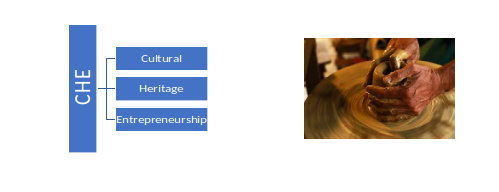
Figure 1 Source: https://pxhere.com/en/photo/641457
Cultural Heritage can be summarized as:
tangible culture property (building, books, monuments, works of art, artefacts, landscapes);
intangible and digital culture heritage (language and knowledge, folklore, oral history, traditions customs, aesthetic and spiritual beliefs) which are more difficult to preserve in comparison with physical cultural goods;
cultural natural heritage (countryside, natural environment, flora and fauna, bio and geo diversity, cultural landscape which is an important part of tourist industry).
As already mentioned in Unit 1, Cultural Heritage can be distinguished in:
• built environment (Buildings, Townscapes, Archaeological remains)
• natural environment (rural landscapes, coasts and shorelines, agricultural heritage)
• artefacts (books & documents, objects, pictures)
The main elements of CHE to be evaluated are:
• Importance for regeneration and economic and social sustainable development of the area, at macro, micro, national, regional, European and international levels on short, medium and long terms. Although this is difficult to predict at the initial stage of the business idea, it is useful to put this type of questions even so early as this in order to put in place procedures that are tuned towards this direction.
• The knowledge absorption capacity vis-à-vis the “state-of-the-art” level and interconnectivity with other economic, social and cultural domains in supporting innovation, competitiveness and good practices. Learning and innovativeness are main components of social enterprises and solidarity- cooperation and networking with other organisations of the third sector are a key element that will assure their existence and the creation of job positions.
• As a complex, social, economic, environmental and knowledge asset, CH requires specific approaches and evaluation criteria based on public-private partnership which needs the maximisation of its positive externalities (marginal external benefits) on different time-horizon, at local, European and international levels.
1.2. Activity: What cultural heritage do you have in your hometown?
We would like to invite you to be part of the project by sharing your idea on one of the following topics:
• Traditional craftsmanship
• Oral traditions
• Performing arts
• Social practices
• Knowledge and practices concerning nature
2. What are the needs, risks and benefits of CHE
Cultural heritage entrepreneurship occupies a central place in
debates on unlocking the innovative, nontechnological potential of
SEE area taking into consideration the diversity and rich culture of
the countries’ history in the respective zone. The aim of this
course is to provide some important aspects regarding the obstacles
faced by CHE, especially in the case of SMEs which represent the
major part of entrepreneurship in this domain. At the same time, we
intent to present some transversal problems and recommendations
related to possible ways the CHE could benefit from internal and EU
market and the digital impact.
In this context we are focusing on the importance of national and international factors playing the role of key determinants for strengthening of entrepreneurship such as:
efficient access to funding;
innovation challenges;
market obstacles;
intellectual property rights;
training and education;
national and international cooperation.
CH entrepreneurship represents an important component of cultural entrepreneurship which becomes an important factor contributing to countries GDP, labour force market development, to export and import of goods and services.i Although there is no consensus on CHE definition, the OECD EUROSTAT Entrepreneurship Indicator Project reveals six important areas for CHE efficiency and well-functioning such as:
access to finance;
technology and R&D;
entrepreneurial capability;
market conditions;
regulatory framework;
entrepreneurial culture.
Cultural Heritage (CH) entrepreneurs, with the particular case of SME, operate in specific market conditions, offer goods and services the nature of which is mainly cultural, content-driven and less commercially-driven.
CH entrepreneurs bring to market goods and services, organise and run cultural heritage in a commercial or not-for-profit manner, depending on the characteristics of cultural heritage (as an assets, cultural capital or as a pure public good).
CHE tries to cope with the strategic objectives of cultural environmental, social, economic and entrepreneurship policies. CHE involves an important dimension spirit of creativity where the first priority could be considered cultural value and a second one the economic value or vice versa. In many cases, CHE prefer the economic motivation, exploitation over the cultural value. The large diversity of CH generates many types of direct and propagated effect on different time horizon. The major part of CH activities consists of small enterprises, micro SMEs 1-3 employees. The larger enterprises (more than 50 employees) are the most important part of the turnover (revenues) in the sector, although their share in the total number of CH enterprises is less than 1 per cent. This size characteristic of CH enterprises called “missing middle” impose important differentiation for policy-makers especially for funding conditions of micro-enterprises facing difficulties to grow into medium-sized ones. Large scale enterprises have the advantage of effective infrastructure for development and research activities. Small-scale enterprises have higher dynamism, better flexibility and lower, risk-taking. Adaptation of a more flexible and dynamic attitude in response to market opportunities, in clustering with larger infrastructure, involving out sourcing. The population accessibility of CH products and services is a fundamental factor for maintaining communities’ identity, legacy and possibilities of national and international contacts, in the context of good practices and sustainable strategic management. A high responsibility belongs to the public sector as the most important custodian of CH assets, interested in the respect of local, regional and national cultural features and the appropriation of cultural values by the population.
A key factor for the promotion of CH is the access to knowledge and education, oriented to improve the awareness and ethics of CH care, capacity building and professional training programs, establishment of appropriate levels of training in accordance with different categories of stakeholders or beneficiaries. The CH product accessibility depends to an important extent on the character and typology of the respective product from the entrepreneurial viewpoint. The existing literature distinguishes several types categories of CHE.ii One of the most useful CHE classification is that which differentiates between a) profit-making, b) non-for-profit entrepreneurship and c) a socially-oriented hybrid formula of the first two types. In the case of not-for-profit CHE the product accessibility as a rule is relatively larger. Economic-oriented hybrid CHE is aiming at profit-making in the framework of different schemes of public-private partnerships. The main scope of socially-oriented hybrid CHE is the increase of social education and wellbeing of population which in turn generates several vertically and horizontally positive propagated effects at micro, mezzo and macro levels.
i WIPO, 2003
ii Santana; Nelson; Oliveira F., 2011; Smith A., 1967
3. Split brain theory

The split-brain theory has provided us with significant insights as to how the brain works and where it processes things like creativity and logical thinking. Knowing this theory will help you understand your way of seeing the world, how you learn best. This can help you adapt your processes when founding a social enterprise.
3.1. Introduction to split-brain theory
Split-brain or callosal syndrome is a type of disconnection syndrome when the corpus callosum connecting the two hemispheres of the brain is severed to some degree. After the right and left brain are separated, each hemisphere will have its own separate perception, concepts, and impulses to act.
Sperry began his research on split-brain in late 1950s to determine the function of the corpus callosum. He noted that humans with a severed corpus callosum did not show any significant difference in function from humans with intact corpus callosum, even though their hemispheres could not communicate due to the severing of the corpus callosum. Sperry postulated that there should be major consequences from cutting the brain structure, as the corpus callosum connected the two hemispheres of the brain, was large, and must have an important function. At the time, he knew that each hemisphere of the brain is responsible for movement and vision on the opposite side of the body, so the right hemisphere was responsible for the left eye and vice versa. Therefore, Sperry designed experiments in which he could carefully monitor what each eye saw and therefore what information is was going to each hemisphere.
Sperry experimented with cats, monkeys, and humans. His experiments started with split-brain cats. He closed one of their eyes and presented them with two different blocks, one of which had food under it. After that, he switched the eye patch to the other eye of the cat and put the food under the other block. The cat memorized those events separately and could not distinguish between the blocks with both eyes open. Next, Sperry performed a similar experiment in monkeys, but made them use both eyes at the same time, which was possible due to special projectors and light filters. The split-brain monkeys memorized two mutually exclusive scenarios in the same time a normal monkey memorized one. Sperry concluded that with a severed corpus callosum, the hemispheres cannot communicate and each one acts as the only brain.
Sperry moved on to human volunteers who had a severed corpus callosum. He showed a word to one of the eyes and found that split-brain people could only remember the word they saw with their right eye. Next, Sperry showed the participants two different objects, one to their left eye only and one to their right eye only and then asked them to draw what they saw. All participants drew what they saw with their left eye and described what they saw with their right eye. Sperry concluded that the left hemisphere of the brain could recognize and analyze speech, while the right hemisphere could not.
In the 1960s when Sperry conducted his split-brain research on humans, multiple scientists were studying brain lateralization, the idea that one hemisphere of the brain is better at performing some functions than the other hemisphere. However, researchers did not know which tasks each side of the brain was responsible for, or if each hemisphere acted independently from the other.
Sperry describes his research in cats in the article "Cerebral Organization and Behavior" published in 1961. To test how the cutting of the corpus callosum affected mammals, Sperry cut the corpus callosum of multiple cats and had them perform some tasks that involved their vision and response to a visual stimulus. After severing each cat´s corpus callosum, he covered one of the cat´s eyes to monitor with which eye the cat could see. Sperry could switch the eye patch from one eye to the other, depending on which visual field he wanted the cat to use. Next, Sperry showed the cats two wooden blocks with different designs, a cross and a circle. Sperry put food for the cat under one of the blocks. He taught the cats that when they saw the blocks with one eye, for instance, the right eye, the food was under the circle block, but when they saw it with the left eye, the food was under the block with a cross. Sperry taught the cats to differentiate between those two objects with their paws, pushing the correct wooden block away to get the food.
When Sperry removed the eye patch and the cats could see with both eyes, he performed the same experiment. When the cats could use both eyes, they hesitated and then chose both blocks almost equally. The right eye connects to the left hemisphere and the left eye connects to the right hemispheres. Sperry suspected that since he cut the corpus callosumin those cats, the hemispheres could not communicate. If the hemispheres could not communicate and the information from one eye only went to one hemisphere, then only that hemisphere would remember which block usually had food under it. From that, Sperry concluded that the cats remembered two different scenarios with two different hemispheres. He suspected that the cats technically had two different brains, as their hemispheres could not interact and acted as if the other one did not exist.
Sperry performed a similar experiment with monkeys, in which he also cut their corpus callosum. He wanted to test if both hemispheres could operate at the same time, even though they were not connected. That required separation of visual fields, or making sure that the right eye saw a circle, while the left eye saw a cross, like in the cat experiment, but without an eye patch and both eyes would see something at the same time instead of interchanging between the open eyes. Sperry solved that by using two projectors that were positioned side-by-side at an angle and showed mutually exclusive images. For example, the projector on the right showed a circle on the left and a cross on the right, while the projector on the left showed a cross on the left and a circle on the right. Sperry placed special light filters in front of each of the monkey´s eyes. The light filters made it so that each eye saw the images from only one of the projectors. That meant one of the eyes saw the circle on the right and the cross on the left, while the other eye saw the cross on the right and the circle on the left. From his experiments with cats, Sperry knew that there was no sharing of information from right and the left hemispheres, so he made the monkeys memorize two different scenarios at the same time.
Sperry concluded that both hemispheres of the brain were learning two different, reversed, problems at the same time. He noted that the split-brain monkeys learned two problems in the time that it would take a normal monkey to learn one, which supported the assumption that the hemispheres were not communicating and each one was acting as the only brain. That seemed as a benefit of cutting corpus callosum, and Sperry questioned whether there were drawbacks to the procedure.
Sperry performed the next set of experiments on human volunteers, who had their corpus callosum severed previously due to outside factors, such as epilepsy. Sperry asked volunteers to perform multiple tests. From his previous experiments with cats and monkeys, Sperry knew that one, the opposite, hemisphere of the brain would only analyze information from one eye and the hemispheres would not be able to communicate to each other what they saw. He asked the participants to look at a white screen with a black dot in the middle. The black dot was the dividing point for the fields of view for a person, so the right hemisphere of the brain analyzed everything to the left of the dot and the left hemisphere of the brain analyzed everything that appeared to the right of the dot. Next, Sperry showed the participants a word on one side of the black dot for less than a second and asked them to tell him what they saw. When the participants saw the word with their right eye, the left hemisphere of the brain analyzed it and they were able to say what they saw. However, if the participants saw the word with their left eye, processed by right hemisphere, they could not remember what the word was. Sperry concluded that the left hemisphere could recognize and articulate language, while the right one could not. Sperry performed the next set of experiments on human volunteers, who had their corpus callosum severed previously due to outside factors, such as epilepsy. Sperry asked volunteers to perform multiple tests. From his previous experiments with cats and monkeys, Sperry knew that one, the opposite, hemisphere of the brain would only analyze information from one eye and the hemispheres would not be able to communicate to each other what they saw. He asked the participants to look at a white screen with a black dot in the middle. The black dot was the dividing point for the fields of view for a person, so the right hemisphere of the brain analyzed everything to the left of the dot and the left hemisphere of the brain analyzed everything that appeared to the right of the dot. Next, Sperry showed the participants a word on one side of the black dot for less than a second and asked them to tell him what they saw. When the participants saw the word with their right eye, the left hemisphere of the brain analyzed it and they were able to say what they saw. However, if the participants saw the word with their left eye, processed by right hemisphere, they could not remember what the word was. Sperry concluded that the left hemisphere could recognize and articulate language, while the right one could not.
Sperry then tested the function of the right hemisphere. He asked the participants of the same experiment that could not remember the word because it was in the left visual field to close their eyes and draw the object with their left hand, operated by the right hemisphere, to which he presented the word. Most people could draw the picture of the word they saw and recognize it. Sperry also noted that if he showed the word to the same visual field twice, then the person would recognize it as a word they saw, but if he showed it to the different visual fields, then the participants would not know that they saw the word before. Sperry concluded that the left hemisphere was responsible not only for articulating language, but also for understanding and remembering it, while the right hemisphere could only recognize words, but was not able to articulate them. That supported the previously known idea that the language center was in the left hemisphere.
In his last series of experiments in humans, Sperry showed one object to the right eye of the participants and another object to their left eye. Sperry asked the volunteers to draw what they saw with their left hand only, with closed eyes. All the participants drew the object that they saw with their left eye, controlled by the right hemisphere, and described the object that they saw with their right eye, controlled by the left hemisphere. That supported Sperry´s hypothesis that the hemispheres of brain functioned separately as two different brains and did not acknowledge the existence of the other hemisphere, as the description of the object did not match the drawing. Sperry concluded that even though there were no apparent signs of disability in people with a severed corpus callosum, the hemispheres did not communicate, so it compromised the full function of the brain.
Sperry received the 1981 Nobel Prize in Physiology or Medicine for his split-brain research. Sperry discovered that the left hemisphere of the brain was responsible for language understanding and articulation, while the right hemisphere could recognize a word, but could not articulate it. Many researchers repeated Sperry´sf experiments to study the split-brain patterns and lateralization of function.
3.2. Activity: Find out how your brain works
For this lesson, students are involved in figuring out which hemisphere of the brain is the dominant side. While the two hemispheres are connected and sharing information through the corpus callosum, everybody have one hemisphere that influences how to learn. Let’s start by answering a quiz:
1. What kind of music do you prefer?
a. Classical music
b. Pop music
2. What is more important to you?
a. Being on time
b. Having a good time
3. How do you figure things out?
a. Careful planning
b. Visualize the outcome
4. When making a decision or choice, what do you go with?
a. Consider alternatives
b. Go with the first idea
5. What do you prefer being?
a. Thoughtful
b. Active
6. What activities would you most like to do?
a. Monopoly, scrabble or chess
b. Athletics, art or music
If you answered mainly “a," then you are left-brained, and would benefit from visual learning; if they answered mainly “b," then they are right-brained, and would benefit from verbal learning. Encourage students to integrate their learning style (verbal or visual) into how they study.
4. Decision making theories
There is no universal agreement on a standardized classification on the theories.i According to Ahmed et al (2012), Decision theories can basically be grouped into two: Normative and descriptive decision theory. While normative theory explains how decisions should be made, descriptive theory explains how decisions are made. Many researchers have also classified the theories as either rational or non-rational.ii In differentiating the two, Gigerenezer (2001) identified four attributes for rational theories as: Optimization, normative, omniscience and internal consistency. In the same vein, non-rational theories are identifiable to possess attributes such as non-optimization, descriptive, search, ecological rationality and cognitive building blocks like emotions, imitation, and social norms.iii Some of the theories that have gained popularity in the context of decision-making are as follows.
i Anwar, 2014.
ii Gigerenezer, 2001; Hansson, 2005; Oliveira, 2007.
iii Anwar, 2014.
4.1. ubjective Expected Utility (SEU) Theory
Savage (1954) developed the axiomatic subjective expected utility (SEU) theory in which a decision maker chooses between alternatives (or strategies) in the presence of risk. Savage capitalized on the assumption that the decision maker will always tend to seek pleasure andavoid pain and as such, he will make the following computations:
i) Subjective utility that accounts on the individuals judged weightings of utility, rather than onobjective criteria.
ii) Subjective probability that accounts on the individuals estimates of likelihood, rather than onobjective statistical computations.
4.2. Prospect Theory
Kahneman and Tversky (1979) developed the theory of choice that accurately describes howpeople actually go about making their decisions. The theory predicts that decision makers tend tobe risk averse in a domain of gains (or when there is a favorable anticipation). Similarly, thedecision maker is relatively risk seeking in a domain of losses. In other words, they establishedthat people aspire for uniqueness in relation to prospects being considered and will tend to shyaway from the components shared by all. They also discovered that people lean more towards theoutcomes obtained with certainty than those obtained by mere probabilities.
4.3. Satisficing Theory
Simon (1957) advanced the concept of bounded rationality where the decision maker has limited information, time and intellectual ability to make a decision. Instead, the decision-maker work with limited and simplified knowledge, to reach acceptable, compromise choices (‘satisficing’),rather than pursue ‘maximizing’ or ‘optimizing’ strategies in which one particular objective is fully achieved.i This approach to decision making involves choosing the first alternative that satisfies minimal standards of acceptability without exploring all possibilities.ii The word “satisficing” goes contrary to the notion of optimization.
i Marshall, 1998.
ii Fred, 2010.
4.4. Attribution Theory
The word “attribution” literally means the grant of responsibility and tries to explain the behavior attributed to a person or situation. Heider (1958) advances the theory concerned with how people perceived the behavior of themselves and other people. Heider (1958) initiated the theory, later Weiner and colleaguesi developed a theoretical framework that has become a major research paradigm of social psychology. Heider divided the behavior attribute into internal and external factors. Internal attribution describes the behaviour within a person and factors attributes like character, attitude, aptitude and personality. In the case of external attribution, the situation gets assign to cause of a particular behavior e.g. the assignment of environment or weather to causality. Weiner (1974) advances a three-stage process that underlies an attribution.
(i) The person must perceive or observe the behavior.
(ii) Then the person must believe that the behavior was intentionally performed, and
(iii) the person must determine if they believe the other person was forced to perform the behavior (in which case the cause is attributed to the situation) or not (in which case the cause is attributed to the other person).
Weiner confined the theory on the most important factors affecting the attribution for achievement such as ability, effort, task difficulty, and luck. Weiner also classified attribution along three causal dimensions: locus of control, stability, and controllability. The locus of control further differentiates into either internal or external.
The stability dimension analyses whether there are changes over time
attributed to causes. For example, we can have ability that is stable
and internal; or an effort that is unstable and internal.
Controllability is in reference to the causes one is able to control
(e.g. skill/efficacy), and from causes one cannot control (e.g.
aptitude, mood, other’s actions, and luck).ii
i e.g. see Jones et al., 1972; Weiner, 1974.
ii Anwar,2014.
4.5. Game theory
Game theory is a mathematical study of strategic decision making. It is considered to be an interactive decision theory as it takes into consideration the conflict and cooperation between intelligent rational decision makers.
4.6. Heuristics
When decision makers make satisficing decisions, they may use a set of heuristics to guide their decisions. A heuristic is a rule of thumb that can help the decision maker find a solution in a complex and uncertain situation.i We use heuristics in our everyday lives. For example, a heuristic rule for dealing with other people is the Golden Rule: "Do unto others as you would have them do unto you." Football coaches use the rule, "When in doubt, punt." In playing chess, we follow the rule of "controlling the center of the board."
Decision making and its various theories are important in the management of every organization. Some of the importance of decision making in management are as follows:
Better Utilization of Resources: Decision making helps to utilize the available resources for achieving the objectives of a library, the available resources are the staff, money, materials, machines, markets and methods.
Facing and tackling problems and challenges: Decision making helps a library or organization to face and tackle new problems and challenges that suddenly and inevitably arise, quick and correct decision making helps to solve problems and accepts new challenges.
Business Growth: Quick and correct decision making results in better utilization of resources which results to business growth.
Achieving objectives: Rational decision making helps the library to achieve all its objectives and meet up with the needs of its users, because rational decisions are made after analyzing and evaluating all alternatives.
Facilitation of innovation: Rational decision making facilitates innovation, this is because it helps develop and create new ideas, products and services in a library.
i Moustakas, 1990.